If you spend enough time around Ocean City, Berlin, or Ocean Pines, you know the breeze coming off the Atlantic is part of the lifestyle.
But that same breeze carries a hidden cost for boat and RV owners.
Around here we call it the “Salt Air Tax.”
Saltwater isn’t just water. It’s an electrolyte that speeds up corrosion dramatically. Even if your boat never leaves the slip or your RV stays parked at Frontier Town, Castaways, or a canal-side driveway, that salty humidity is working on your equipment every single day.
Here are five of the most common ways the coast slowly eats away at boats and RVs across Delmarva and what you can do to stay ahead of it.
1. The Green Crust (Electrical Corrosion)
Ever notice green or white powder building up on battery terminals, shore power plugs, or wiring connections?
That’s corrosion forming on copper. Salt air finds its way into unsealed wiring and connectors and slowly increases electrical resistance.
Common symptoms
- Flickering lights
- Electronics rebooting randomly
- Engines that “click” but won’t crank
What helps
Marine-grade tinned wiring and protecting connections with dielectric grease or corrosion inhibitors can prevent a lot of these headaches.
2. Aluminum Pitting on Outboards
Salt air is tough on aluminum, especially on outboard motors. Whether you’re running a Yamaha, Suzuki, Honda, or Mercury, the salt air treats every engine the same.
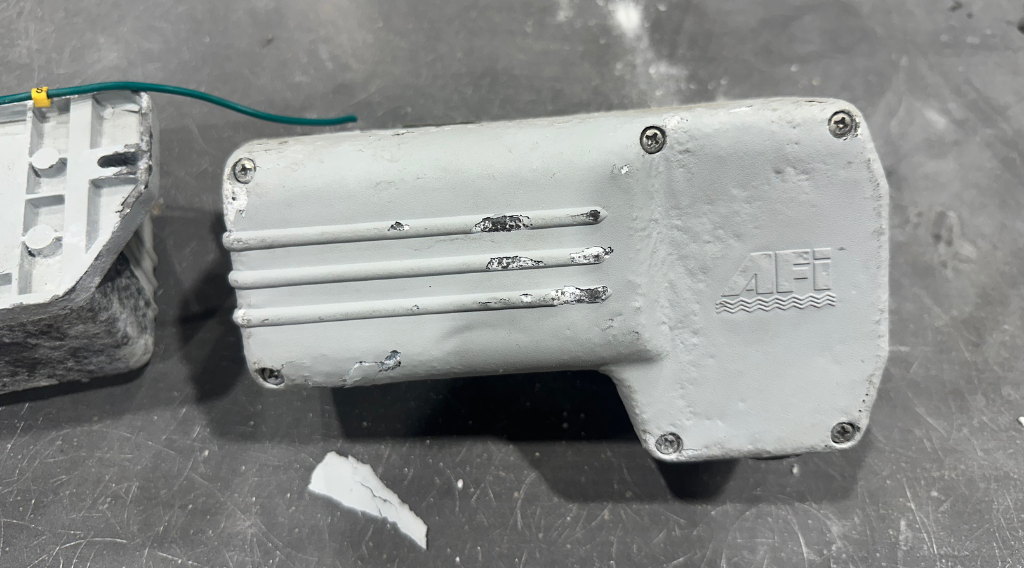
If you see small white spots or bubbles under the paint on your lower unit, that’s corrosion starting to pit the metal.
Left alone long enough, it can cause real damage.
What helps
Flush your motor with freshwater every time you run it. Not just the outside. Flush the cooling system for at least five minutes so salt doesn’t sit inside the engine.
3. The RV AC Cooling Trap
RV owners around Assateague, Fenwick Island, and West OC often say their AC unit “just isn’t cooling like it used to.”
Most of the time it isn’t a refrigerant problem.
Salt air corrodes the thin aluminum cooling fins on rooftop units. Once those fins start to break down or clog up, the system can’t move air the way it should.
What helps
A professional coil cleaning once a year can dramatically extend the life of your RV air conditioner.
4. Sacrificial Anodes (“Zincs”)
Boats use sacrificial anodes, often called zincs, to protect the engine and metal components from corrosion.
They’re designed to corrode so your motor doesn’t.
In salty areas like the Isle of Wight Bay and Sinepuxent Bay, they wear down quickly.
Rule of thumb
If your anodes are more than 50% gone, they’re no longer protecting your engine properly. Check them regularly during the season.
5. Frozen Steering and RV Slide-Outs
Salt air mixes with old grease and moisture and eventually turns into something closer to glue.
Every spring we see boats around West Ocean City with frozen steering cables and RV slide-outs that struggle or bind.
What helps
Routine lubrication with moisture-displacing products keeps moving parts from seizing up.
Don’t Pay the Full Salt Air Tax
The biggest problem with corrosion is that it works quietly.
Most owners don’t notice it until something stops working and by then the repair bill can be expensive.
At Top End Performance, we specialize in mobile marine and RV service along Delmarva’s coast. Whether your boat is in the slip or your RV is parked at a campground, we come to you.
From electrical diagnostics and outboard service to RV maintenance and corrosion prevention, we help owners stay ahead of the salt. Check out our Mobile Service Rate Sheet for transparent pricing on all our coastal health checks.
Worried about your rig?
Contact us for a Mobile Coastal Health Check or text us at (410) 808-6486.